
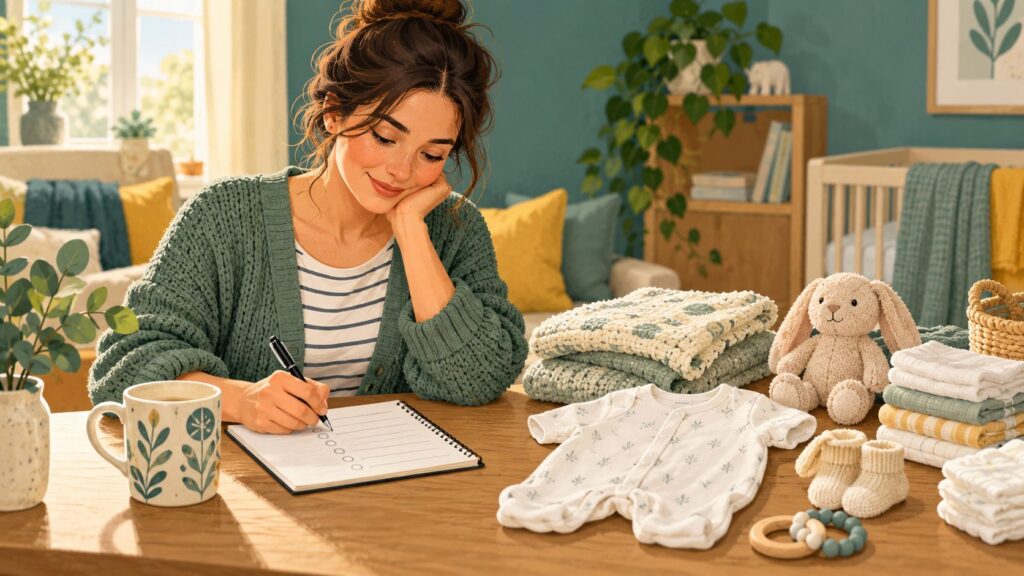
Preparing for a baby can make every product look essential. In practice, families have different routines, homes and preferences, and buying too much before you know what works can waste money.
Separate immediate needs from later purchases
Focus first on what will be required in the early weeks. Many products can be bought later if a genuine need develops.
Be careful with quantities
Babies can change sizes quickly and may not suit every product. Avoid building excessive stocks of clothing or consumables before you know what you use.
Use second-hand selectively
Pre-owned clothing, furniture and other items can offer excellent value when condition and suitability are clear. For safety-critical baby products, follow current manufacturer and recognised safety guidance rather than treating every second-hand item the same.
Ask what friends and family already have
Borrowing or accepting suitable items can prevent duplicates, particularly for products used for a short period.
Ignore pressure to build a perfect nursery
A coordinated room can be enjoyable, but aesthetics and baby essentials are different budget categories. Decide deliberately what you want to spend on each.
Create a baby-cost plan
Add expected recurring and one-off costs to your family budget and review it once you know what your household actually uses.
A calm, practical checklist for buying only what you need at first, finding good-value items and keeping safety ahead of marketing.
Preparing for a baby can make every product look essential. Friends, adverts and long checklists may suggest you need a fully equipped nursery before the birth. Most families can begin with a small set of essentials, learn what suits their baby and add items gradually. Your home, transport, feeding plans, health needs and access to washing all affect what is useful. There is no single perfect shopping list.
Start with the first days, not the first year
Make two lists: what must be ready before the baby arrives, and what can wait until you know your routine. Immediate needs generally include a safe sleep space, a suitable car seat if travelling by car, a few changes of clothing, nappies, basic changing supplies and a way to feed the baby. Some needs depend on your circumstances; a pushchair may be essential for one household and less urgent for another.
The NHS has a practical newborn buying guide. Use it as a starting point rather than a demand to buy every item listed. Ask your midwife or health visitor about individual health or feeding questions. Do not buy medical products or follow feeding advice from an advert in place of support from a qualified professional.
Make a short clothing and changing plan
Babies can outgrow early sizes quickly, and sizing varies between brands. Start with a few comfortable outfits, vests and sleepsuits in a likely size rather than a large wardrobe. Choose clothing that is easy to change and wash. If you receive hand-me-downs, check fastenings, fabric, cleanliness and condition; repair or recycle anything with loose parts, damaged poppers or unsafe cords.
For nappies, consider whether you want to start with disposable, reusable or a mix. You do not have to commit to a large supply before the baby arrives. A small initial pack lets you check fit and skin comfort. If using reusables, look into washing access, drying space, local nappy libraries or council schemes, and the upfront cost of the system. Include detergent, liners or service fees where relevant when comparing longer-term costs.
For changing, a clean flat surface and supplies within reach may be enough. A purpose-made changing table is optional if you have a safe alternative and can supervise the baby continuously. Never leave a baby unattended on a raised surface, even briefly. Consider where you will change the baby in your home and what you can carry between rooms.
Prioritise a safe sleep space
Plan for a cot, crib or Moses basket that meets current safety guidance and has a firm, flat mattress that fits snugly. Follow current NHS safer-sleep advice: the safest place for a baby to sleep for the first six months is their own clear sleep space in the same room as an adult. Avoid buying decorative or padded products because they are marketed as nursery essentials. The NHS advises against pillows, duvets, cot bumpers and soft items around a baby’s sleep space because of safety risks.
Read the current NHS safer-sleep guidance and the manufacturer’s instructions. A used cot or crib needs careful checking for condition, completeness, stability and compatibility with the mattress. Do not use an item with missing parts, modifications or unclear instructions. GOV.UK’s second-hand product safety guidance recommends buying only cot mattresses in good condition; current NHS advice says a new mattress is preferable where possible. If you are unsure, seek advice from a health professional or an established safety organisation.
Choose a car seat carefully
If your baby will travel in a car, arrange a suitable car seat before the first journey. Check the seat is compatible with your vehicle and appropriate for a newborn, and practise fitting it in advance. The NHS car-seat guide recommends trying the seat in your car and getting fitting help where available. Check the current manufacturer instructions and UK legal requirements before buying.
For safety, do not buy a second-hand car seat from an unknown seller: hidden damage after a collision can compromise it. GOV.UK explicitly warns against second-hand baby car seats. If a trusted person offers a seat, you would need reliable knowledge of its full history, age, condition and instructions, but buying new is the safer default. Do not choose a model solely because it is bundled with a pushchair; make sure it fits the vehicle and your actual travel needs.
Borrow and buy pre-owned selectively
Good-condition clothing, books, some toys and many ordinary household items can be borrowed or purchased second-hand, which may substantially reduce cost. Ask the owner how an item was stored and used. Inspect it in person if possible, check that all parts and instructions are available, and search for product safety notices or recalls on GOV.UK. Do not use an item that is broken, modified, missing safety parts or impossible to identify.
Be more cautious with products where deterioration or missing instructions can create a hazard, including electrical items, sleep products and equipment that restrains or supports a child. Check the exact model and its age, not just the brand. Avoid products that make unsupported claims about preventing sleep-related harm. If you cannot verify the product’s safety or suitability, do not feel obliged to accept it just because it was free.
Do not buy feeding equipment before you know what you need
Feeding plans can change, and every household’s circumstances are different. If you plan to breastfeed, you may not need to buy a pump, steriliser or large stock of bottles in advance; these can often be added if they become useful. If using formula, follow current NHS and product guidance on safe preparation and storage. Do not stockpile more than you can use before dates expire, and do not dilute or stretch feeds to save money. If cost or feeding is difficult, contact your midwife, health visitor or appropriate local support service promptly.
For bottle feeding, basic equipment may be all you need at first. Compare cleaning requirements, replacement parts and compatibility before buying a bundle. A warmer, a particular brand of bottle, a nursing chair and many accessories are preferences rather than universal necessities. You can wait to see what makes daily care easier.
Think about transport, home and seasons
A pushchair should suit your everyday routes, storage space, public transport and ability to lift it. Test the fold and handle height where possible. If you mostly walk on uneven paths, check wheels and suspension; if you use buses, check local rules and space. A sling or carrier can be useful, but learn how to use it safely from trusted guidance and make sure it fits the adult who will wear it.
Buy seasonal clothing only when the season and size are clearer. Avoid large purchases based on an estimated due-date weather forecast months ahead. The same applies to toys, high chairs, travel cots and toddler equipment: many can wait until the baby is near the relevant stage. Check storage and return periods before buying far in advance.
Make a budget and a borrowing list
Set an amount available after rent, bills, food and essential costs. Divide purchases into “needed before birth”, “can borrow”, “can buy later” and “nice to have”. Ask family whether they would like to contribute to one useful item rather than buying multiple outfits or gadgets. If you receive gifts, keep a simple note to avoid duplicates and exchange unsuitable sizes promptly.
Use a table to compare total cost, not just the headline price:
| Item | Need by | New or used? | Checks before buying |
|---|---|---|---|
| Sleep space | Before first night at home | Check condition and mattress | Current guidance, parts, fit, instructions |
| Car seat | Before car travel | New is safer default | Vehicle compatibility, fit, current rules |
| Clothing | Before birth | Often suitable second-hand | Small quantity, size, condition |
| Feeding items | Based on your plan | Wait where possible | Cleaning, compatibility, safe instructions |
| Pushchair or carrier | When travel requires it | Inspect carefully | Route, storage, fit and safe use |
For household planning, add recurring costs such as nappies, laundry, travel and childcare to your family budget. If finances are under pressure, our household-bills guide points to support options. This article is general information, not medical or individual financial advice; follow current NHS, GOV.UK and manufacturer guidance for safety decisions.